
5 Letter Word Generator: Find Words from Letters Instantly
Use our free 5 Letter Word Generator to find words from letters instantly. Perfect for Wordle, Scrabble, crosswords, and vocabulary building.
A 5-letter word generator is one of the fastest ways to solve word puzzles, win word games, and build vocabulary at the same time. Most people search for one at 11 p.m. with a half-finished Wordle grid, or while stuck on a Scrabble rack that refuses to form anything useful. This guide goes beyond a simple tool description. It explains how a word generator from letters actually works, how to use it correctly, where free tools fall short, and how to turn a quick puzzle fix into a long-term vocabulary habit. If you want to try one while you read, the free 5-letter word generator on CalculatorsKit lets you test every example below in real time.
What a 5 Letter Word Generator Actually Does
A 5-letter word generator takes a set of letters you already have and returns every valid 5-letter word that can be formed from them. That sounds simple, but the real value depends on how the generator handles three things:
Letter reuse: whether it lets you use the same letter twice if your rack has only one copy
Position locking: whether it can fix a known letter in a known spot, like Wordle's green tiles
Dictionary source: whether it checks against a proper word list or a thin, incomplete one
Most free tools online only do the first part well. They ignore position locking, which is exactly the feature that matters most for Wordle-style games. If a tool cannot separate 'letters I have' from 'letters I know the position of,' it will flood you with useless results.
For the dictionary side, most reliable generators validate results against a standard reference such as Merriam-Webster for everyday English, or the Collins Scrabble Words list for tournament-legal play. A generator that skips this step is the main reason invalid words show up in results.
Who Actually Uses a Word Generator From Letters
The search intent behind this topic is wider than 'Wordle help.' Based on how people phrase these searches, there are four distinct groups:
Puzzle players: Wordle, Scrabble, Words With Friends, and crossword solvers who are stuck mid-game
Teachers and parents: building spelling and phonics drills for kids using a fixed letter set
Writers and content creators: hunting for a five-letter title, brand name, or headline word
Language learners: using letter manipulation as a vocabulary-building exercise rather than a shortcut
A generator that only serves puzzle players misses three-quarters of this audience. That is one reason many existing tools rank for the keyword but do not actually satisfy the search intent behind it.
How a Word Generator From Letters Works Behind the Scenes
Understanding the logic makes you faster at using any generator, even a basic one. Two engines are doing the work.
Anagram Logic
The generator breaks your letters into a sorted string, then compares that string against a dictionary index that has also been pre-sorted. For example, the letters T, R, A, I, N sort into A-I-N-R-T. Any dictionary word that sorts into the same sequence TRAIN, RATIN (not valid, just illustrating the method) becomes a candidate. This is why anagram-based tools are fast: they are comparing sorted strings, not testing every combination one by one.
Pattern or Constraint Matching
This is the logic Wordle-style tools need. Instead of just shuffling letters, the generator applies rules: 'position 1 must be S,' 'position 3 cannot be E,' 'the word must contain A and R somewhere.' This is closer to a regular-expression search than a pure anagram search. A tool that only does anagram logic will fail badly on Wordle-type queries, because it cannot lock letters into place.
Knowing this difference explains a common frustration: people search 'word generator from letters no limit' expecting a tool that handles both jumbled letters and fixed positions, then get disappointed when a basic anagram tool cannot do the second part.
How to Use a 5 Letter Word Generator Correctly
Follow this sequence instead of typing random letters and hoping for a good result.
Write down every letter you are certain is in the word, separated from letters you are only guessing at.
If you know a letter's exact position (a green tile, a filled crossword box), enter it in that exact slot rather than mixing it into the general letter pool.
If you know a letter exists but not where, mark it as 'included' rather than 'positioned.' Most decent generators separate these two inputs.
Exclude letters you have already ruled out. Skipping this step is the single biggest reason people get a flooded, useless result list.
Run the search, then sort results by common usage rather than alphabetically. A rare word like ABAKA is technically valid but rarely the answer you need.
If you get zero results, remove your least-certain constraint first, not your most-certain one. This isolates the mistake faster.
This sequence matters more than the tool itself. Two different generators given the same disciplined input will produce nearly identical useful results. A messy input produces a messy output regardless of how good the underlying tool is.
Creative Word Generator With Letters: Turning Random Letters Into Playable Words
A creative use case that most guides skip: using a letter generator not to solve a puzzle, but to invent one. Teachers, party hosts, and content creators often need to go the other direction: start with a target word, then generate a scrambled version for other people to solve.
The workflow looks like this:
Pick a base word suited to your audience's difficulty level
Scramble the letters using the generator's shuffle function
Verify that the scrambled set does not accidentally spell a second valid word, which would create two possible answers
Add a category hint if the puzzle is for children or beginners, since an open scramble with no hint frustrates new solvers
This reverses the usual process: instead of letters to word, it is word to letters, then back to word again for someone else. This is the exact meaning behind the search 'creative word generator with letters'; people are not just solving, they are building content.
Making Many Words From One Word: Game Examples
This is a classic vocabulary drill, sometimes called a word-within-a-word game. Take one longer word and extract every smaller valid word hidden inside its letters.
Example using the word PLANET:
3-letter words: PAN, PET, TAN, ANT, LAP, NAP
4-letter words: PLAN, PANT, LEAN, PANE
5-letter words: PLANE, PANEL
Example using the word STREAM:
3-letter words: SAT, ARE, EAR, RAT, TEA, SEA
4-letter words: SEAT, RATE, TEAR, STAR, MAST
5-letter words: MATES, TEAMS, MEATS
This drill works well in classrooms because it needs no equipment, scales to any age group, and naturally teaches letter-pattern recognition. Set a 3-minute timer per word and score one point per valid word found. Give a bonus point for any word that uses four or more letters, since those are harder to spot.
Common Mistakes People Make When Searching '5 Letter Words Using These Letters'
These mistakes show up repeatedly, and fixing them saves real time.
Typing letters in the order they appear in the puzzle instead of listing them as a plain set, which confuses tools that expect unordered input
Forgetting to exclude gray or eliminated letters, so the same wrong letters keep reappearing in suggestions
Assuming a generator understands double letters automatically; if your rack has one E but the generator assumes two, results will include impossible words
Ignoring plural and tense variants, then discarding a correct answer because it looked unfamiliar
Searching with fewer than five letters confirmed, which returns thousands of loosely related words instead of a short, useful list
Word Generator From Letters No Limit: What This Phrase Actually Means
This search term usually means one of two things, and most tools only answer one of them.
No limit on word length: the tool should return 3, 4, 5, 6, and 7-letter words from the same letter set, not just five-letter results
No limit on searches: a free tool without a daily cap, login wall, or ad-gated result limit
A genuinely useful free tool should satisfy both meanings: unrestricted word-length output and unrestricted repeat use. If a tool caps you after a handful of searches or hides longer words behind a paywall, it is not actually a 'no limit' generator, regardless of what its name claims.
Free Word Maker From Letters vs Paid Tools: What Actually Matters
Most people assume paid tools are automatically more accurate. In practice, the dictionary source matters far more than the price tag.
A free tool built on a full Scrabble-legal dictionary will outperform a paid tool built on a thin, generic word list
Speed matters for live games; a tool that takes several seconds to return results is a poor fit for a timed match
Ad-heavy free tools can slow page loading and interrupt the exact moment you need a fast answer, which defeats the purpose
Paid tools tend to add convenience features (saved word lists, filters by difficulty) rather than better core accuracy
If accuracy is the priority, check the dictionary source before checking the price. If convenience and speed matter more, a lightweight free tool with no clutter is usually the better daily choice.
Building Vocabulary With a Word Generator: A Practical Framework
Using a generator only to solve a puzzle wastes half its value. Here is a simple framework to turn it into an actual vocabulary-building habit.
Pick one new word from your generated results each session, one you did not already know.
Look up its meaning immediately rather than skipping past it toward the puzzle answer.
Use it once in a sentence out loud or in writing within the same day.
Keep a running list of these words in a notes app, sorted by the letter pattern that produced them.
Revisit the list weekly and re-test yourself by covering the meaning and recalling it from the word alone.
This turns a five-minute puzzle break into a compounding vocabulary gain. Over a few months, this produces a noticeably larger working vocabulary without ever sitting down for a dedicated study session.
Word Games Where a 5 Letter Word Generator Genuinely Helps
Wordle and Wordle-style clones position-locking generators are ideal here
Scrabble and Words With Friends anagram-based generators with dictionary validation
Crossword puzzles pattern generators that accept blank spaces for unknown letters
Jumble and daily scramble columns pure anagram generators
Classroom spelling games word-within-a-word extraction, as shown in the PLANET and STREAM examples above
If you also need a strong, memorable password after a word game session, the same site's free password generator uses the same instant, no-signup approach as the word generator above.
Quick Checklist Before You Search Again
Have you separated confirmed letters from guessed letters?
Have you excluded every letter you already know is wrong?
Have you locked known positions instead of dumping every letter into one box?
Are you checking the tool's dictionary source if the game has a strict word list?
Have you picked at least one new word to actually learn today, not just to play?
Conclusion
A 5-letter word generator is genuinely useful for far more than late-night Wordle panic. Used with a clear input process, it becomes a fast puzzle-solving tool, a classroom teaching aid, a content-creation shortcut, and a quiet but effective vocabulary builder. The tool matters less than the method: separate what you know from what you are guessing, exclude what you have ruled out, and pick at least one new word to actually learn every time you search.
Ready to put this into practice? Open the free 5 letter word generator and run through the checklist above with your current puzzle, or browse the full calculator and tool library for more free, no-signup tools.
Frequently Asked Questions
Q: Can a 5 letter word generator solve Wordle for me?
It can narrow down options fast if you enter your green, yellow, and gray letters correctly, but you still choose the final guess. Treat it as a filter, not an autopilot.
Q: Is it cheating to use a word generator in Scrabble?
Most casual games and practice sessions allow it. Official tournament play does not. Check the rules of the specific match before relying on one.
Q: Why do some generators show words that are not real?
This usually means the tool is using a weak or outdated dictionary file. A generator built on a proper word list should not return invalid entries.
Q: What is the difference between a word generator from letters and a word generator from words?
A letter-based generator starts from loose letters with no order. A word-based generator starts from an existing word and extracts smaller valid words hidden inside it, similar to the PLANET and STREAM examples covered earlier.
Related Articles
Use our easy weighted grade calculator to find your GPA and final score fast. Enter grades, weights & get instant results free for students.
Use our free cubic feet calculator to calculate box, tank, wood, soil, and storage volume accurately from feet, inches, or cm.
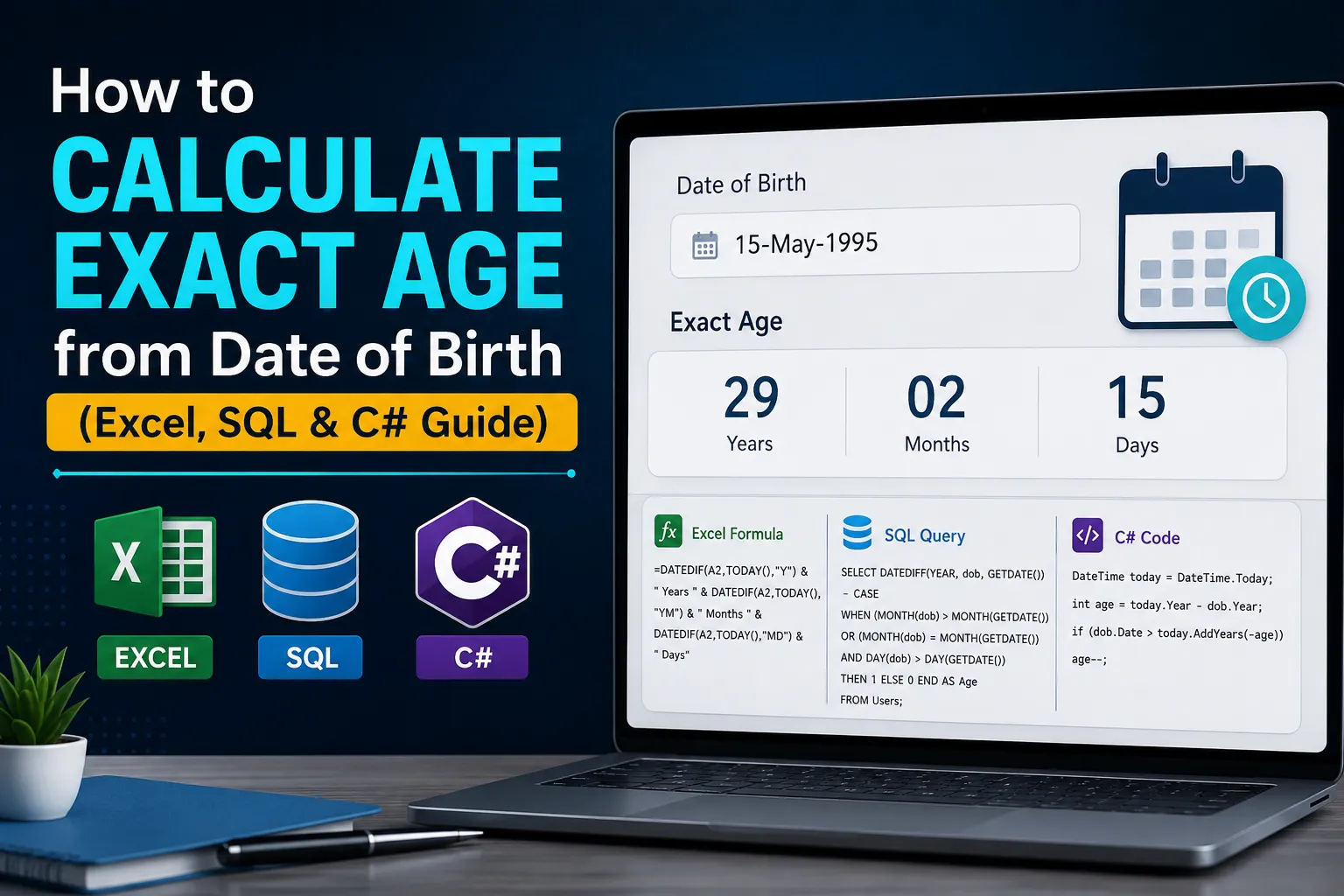
Learn how to calculate exact age from date of birth using Excel, SQL, and C#. Get accurate formulas, examples, avoid common mistakes, and calculate age for any date.
Calculate your exact age from your date of birth instantly. Free Age Calculator with years, months, days, birthday countdown, and leap year accuracy.