
How Much Water Should I Drink Calculator: Your Daily Target in ml, Litres and oz
Wondering how much water you need daily? Use our free water intake calculator to get your ideal amount in mL, litres, and oz based on your weight and activity.
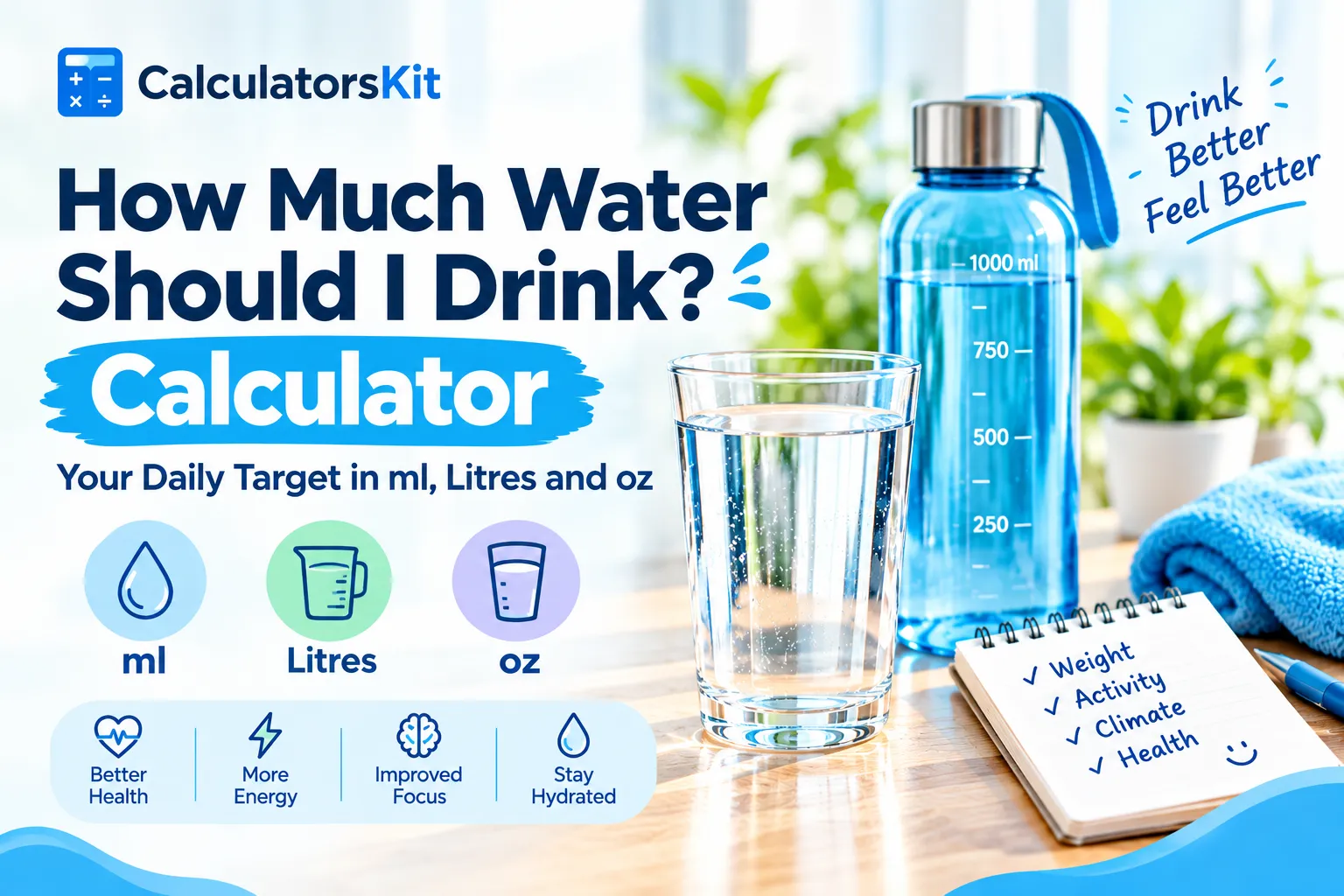
Most healthy adults need about 2 to 3 litres of drinks a day, but your exact number depends on body weight, activity, climate, and health. The old "eight glasses" rule ignores all four. A how much water should I drink calculator fixes that by turning your weight and lifestyle into a personal daily target. You can try our free water intake calculator as you read.
This guide shows how the calculation works, how to do it by hand in ml, litres, and oz, and how to adjust it for age, pregnancy, weight loss, creatine, and hot weather. A large 2022 Science study of 5,604 people in 23 countries found that body size, activity, and climate all shape daily water use.
Quick Answer: How Much Water to Drink a Day
Healthy adults need roughly 2 to 3.7 litres of total water a day. Food supplies about 20% of that, so drinks cover the rest. Use the table as a starting point, then fine-tune it with the steps below.
Group | Total water per day | From drinks (approx.) |
|---|---|---|
Adult men | 3.7 L (125 oz) | 3.0 L (101 oz) |
Adult women | 2.7 L (91 oz) | 2.2 L (74 oz) |
Pregnant women | 3.0 L (101 oz) | 2.3 L (78 oz) |
Breastfeeding women | 3.8 L (128 oz) | 3.1 L (105 oz) |
These figures come from the US National Academies and describe adequate intake for healthy people, not strict targets. The European Food Safety Authority sets slightly lower totals: 2.5 L for men and 2.0 L for women.
A Simple Step-by-Step Guide to Using a Water Intake Calculator
Every reliable calculator uses the same logic. Learn the manual version, and you can check any tool’s answer in under a minute.
Multiply your weight in kilograms by 30 to 35 ml. Use 30 ml if you sit most of the day and 35 ml if you move a lot. A moderately active 70 kg person uses 33 ml: 70 × 33 = 2,310 ml, or about 2.3 litres. Only know your weight in pounds? Convert it with a weight converter.
Be aware that this 30 to 35 ml rule is a practical rule of thumb, not an official guideline. Health agencies set targets by age and sex instead, so compare your result with the quick answer table
Add 400 to 800 ml for every hour of exercise. The exact amount depends on how much you sweat. If your T-shirt is soaked, aim for the higher end.
Add about 500 ml on hot or humid days, or when you spend time at high altitude. Heated and air-conditioned rooms also dry your mouth and throat, so keep a bottle in sight.
Add fluids during fever, vomiting, or diarrhoea. Pregnancy and breastfeeding also raise your needs. If you have kidney, heart, or liver disease, or your doctor limits your fluids, follow that advice instead of any calculator.
Water Intake Calculator by Weight (kg, ml, Litres, oz)
This table applies the 30 to 35 ml per kg rule. Find your weight and read your daily range.
Body weight | Daily range (ml) | Litres | US fl oz |
|---|---|---|---|
50 kg (110 lb) | 1,500–1,750 | 1.5–1.75 | 51–59 |
60 kg (132 lb) | 1,800–2,100 | 1.8–2.1 | 61–71 |
70 kg (154 lb) | 2,100–2,450 | 2.1–2.45 | 71–83 |
80 kg (176 lb) | 2,400–2,800 | 2.4–2.8 | 81–95 |
90 kg (198 lb) | 2,700–3,150 | 2.7–3.15 | 91–107 |
100 kg (220 lb) | 3,000–3,500 | 3.0–3.5 | 101–118 |
Keep these conversions handy:
1 litre = 1,000 ml = about 33.8 US fl oz
1 US cup = 8 oz = about 237 ml
Pounds shortcut: multiply your weight in lb by 0.45 to 0.53 to get ounces, or use a volume converter for ml and oz
Above about 100 kg, the formula can overshoot. Start with the lower number, then adjust by thirst and urine colour.
How Much Water Do Men and Women Need Each Day?
Men usually need more water because they carry more muscle and body mass. The National Academies figures show about 3.0 litres of drinks for men and 2.2 litres for women. Weight still matters more than sex, though. A 90 kg woman often needs more water than a 60 kg man.
Water Intake by Age: Kids, Teens, and Older Adults
Children need less water in total, but more per kilogram than adults. Do not use the weight formula for them. Use these age-based totals instead:
Ages 1 to 3: about 1.3 L total, with roughly 0.9 L from drinks
Ages 4 to 8: about 1.7 L total, with roughly 1.2 L from drinks
Ages 9 to 13: about 2.1 L (girls) or 2.4 L (boys) total
Ages 14 to 18: about 2.3 L (girls) or 3.3 L (boys) total
Babies under 12 months get their fluid from breast milk or formula, so ask your paediatrician before offering water. For school-age children, send a refillable bottle and ask them to finish it by lunch.
Older adults face a different problem. Thirst fades with age, so waiting to feel thirsty can leave you behind. Set a schedule instead: one glass with each meal and one between meals.
Water Intake During Pregnancy and Breastfeeding
Your body needs extra fluid to support blood volume, amniotic fluid, and milk production. The National Academies suggest about 3.0 litres of total water during pregnancy, with roughly 2.3 litres from drinks. During breastfeeding, the total rises to about 3.8 litres, with roughly 3.1 litres from drinks.
Sip small amounts all day if nausea makes large glasses hard
Try cold water, ice chips, or water with a slice of lemon if plain water tastes off
Speak to your midwife or doctor if you notice swelling, high blood pressure, or constant thirst.
How Much Water to Drink a Day to Lose Weight
Water contains no calories, and it helps in two practical ways. It replaces sugary drinks, and it fills your stomach before meals. In a 12-week randomised trial of 48 overweight or obese adults aged 55 to 75, those on a low-calorie diet who drank 500 ml before each meal lost about 2 kg more than those who did not.
Extra water will not melt fat, though. Pair your normal water target with a calorie goal from a calorie calculator or a BMR calculator, and add these habits:
Drink 300 to 500 ml before your main meals
Swap one sugary drink a day for water. A 330 ml can of cola holds about 140 calories
Drink a glass when a snack craving hits, then wait ten minutes
Water Intake With Creatine and Gym Training
Creatine draws water into your muscle cells. The International Society of Sports Nutrition position stand reviews more than 200 studies and finds no compelling evidence of harm in healthy people at standard doses.
Still, many lifters add about 500 ml (17 oz) to their base target when they take 3 to 5 g a day. The extra water also helps your stomach during a loading phase. Use this simple gym check:
Weigh yourself before and after training
Replace about 1.25 to 1.5 litres for every 1 kg you lose
Add electrolytes only for sessions longer than 60 to 90 minutes or heavy sweating
UK, NHS, Australia, and US Water Guidelines
Guidance differs by country because some bodies count total water and others count drinks only.
UK (NHS): The Eatwell Guide recommends 6 to 8 cups or glasses of fluid a day, enough to keep your urine pale yellow.
Australia (NHMRC): About 2.6 litres for men and 2.1 litres for women, from all fluids including water.
Europe (EFSA): 2.5 litres for men and 2.0 litres for women, from drinks and food combined.
USA (National Academies): 3.7 litres for men and 2.7 litres for women in total water.
Read the NHS figure as a baseline for sedentary adults. Then use the weight formula to personalise it.
Do You Really Need to Drink 3 Litres a Day?
Reddit threads and fitness forums often treat 3 litres as the gold standard. For most people, it is more than necessary. A 60 kg office worker usually does well on around 2 litres of drinks plus normal food. A 90 kg builder working outdoors may need 3.5 litres or more.
Match your intake to your size and your day, not to a social media challenge. Pale yellow urine and steady energy tell you more than a number on a bottle.
What Counts Toward Your Daily Water Intake
The NHS confirms that water, lower-fat milk, and sugar-free drinks, including tea and coffee, all count.
Counts fully: water, sparkling water, herbal tea, tea, coffee, milk, and soup
Counts partly: juice and smoothies, which add sugar, plus fruit and vegetables such as cucumber and watermelon, which are about 90% water
Counts with caution: alcohol, because it increases urine output
Signs You Drink Too Little or Too Much
Signs of too little water
Dark yellow urine
Headache, dry mouth, or tiredness
Constipation
Dizziness when you stand up
Signs of too much water
Clear, colourless urine all day
Bathroom trips every hour
Nausea or headache after large amounts
Severe overhydration, called hyponatremia, is rare but dangerous. It mostly affects endurance athletes who drink far more than they sweat out. Healthy kidneys clear roughly 0.7 to 1 litre per hour, so sip rather than gulp.
Try the urine colour test. Aim for pale yellow, and check at midday, because morning urine is naturally darker.
Common Water Intake Mistakes
Using one fixed number for everyone
Drinking most of your water in the evening to catch up, which disrupts sleep
Forgetting to drink more when you are sick, flying, or exercising
Relying on thirst alone when you are older
A Simple Daily Water Plan You Can Copy
Here is a sample plan for a 70 kg office worker with a 2.3 litre target:
On waking: 300 ml of water
With breakfast: 250 ml of tea or coffee
Mid-morning: 400 ml of water
With lunch: 300 ml
Afternoon: 500 ml of water
With dinner: 300 ml
Evening: 250 ml of herbal tea
Use a 1-litre bottle with time marks, and set phone reminders tied to habits you already have. Track for one week, then adjust by thirst and urine colour.
When to Talk to a Doctor
Speak to a doctor if you have constant thirst, very frequent urination, swelling in your legs, or a condition that affects fluids, such as kidney, heart, or liver disease. Medicines like diuretics also change your needs. Seek urgent help for confusion, fainting, or no urine for many hours. This guide offers general information and does not replace medical advice.
Frequently Asked Questions
Q: How much water should I drink a day in litres?
Most healthy adults need about 2 to 3 litres of drinks a day. Multiply your weight in kg by 30 to 35 ml for a personal estimate, then adjust for activity and climate.
Q: How many ounces of water should I drink a day?
Multiply your weight in pounds by 0.45 to 0.53. A 150 lb adult needs about 68 to 80 oz.
Q: Does coffee count toward my water intake?
Yes. Moderate coffee and tea contribute to your daily fluid total.
Q: Does thirst mean I am already dehydrated?
Not always. Thirst starts at mild fluid loss. Still, older adults and athletes should drink on a schedule rather than wait.
Conclusion
A good how much water should I drink calculator gives you a starting number, not a rule for life. Begin with 30 to 35 ml per kg, add water for exercise and heat, and adjust for your life stage. Then watch your urine colour and energy for a week. Ready for your number? Run it through our water intake calculator, or explore more health calculators.
Related Articles
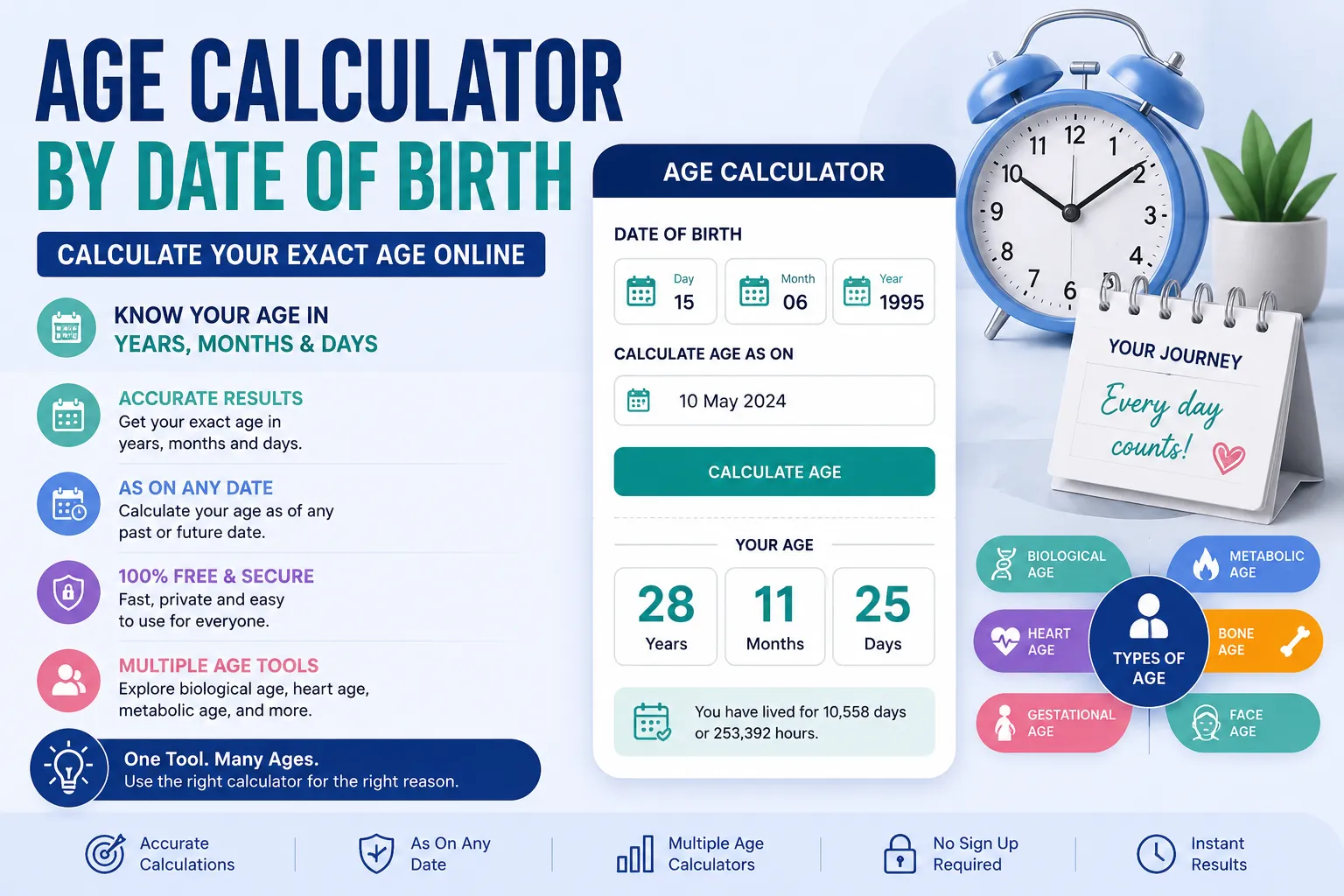
Calculate your exact age online by date of birth. Find your age in years, months, and days, or calculate age as of any past or future date.
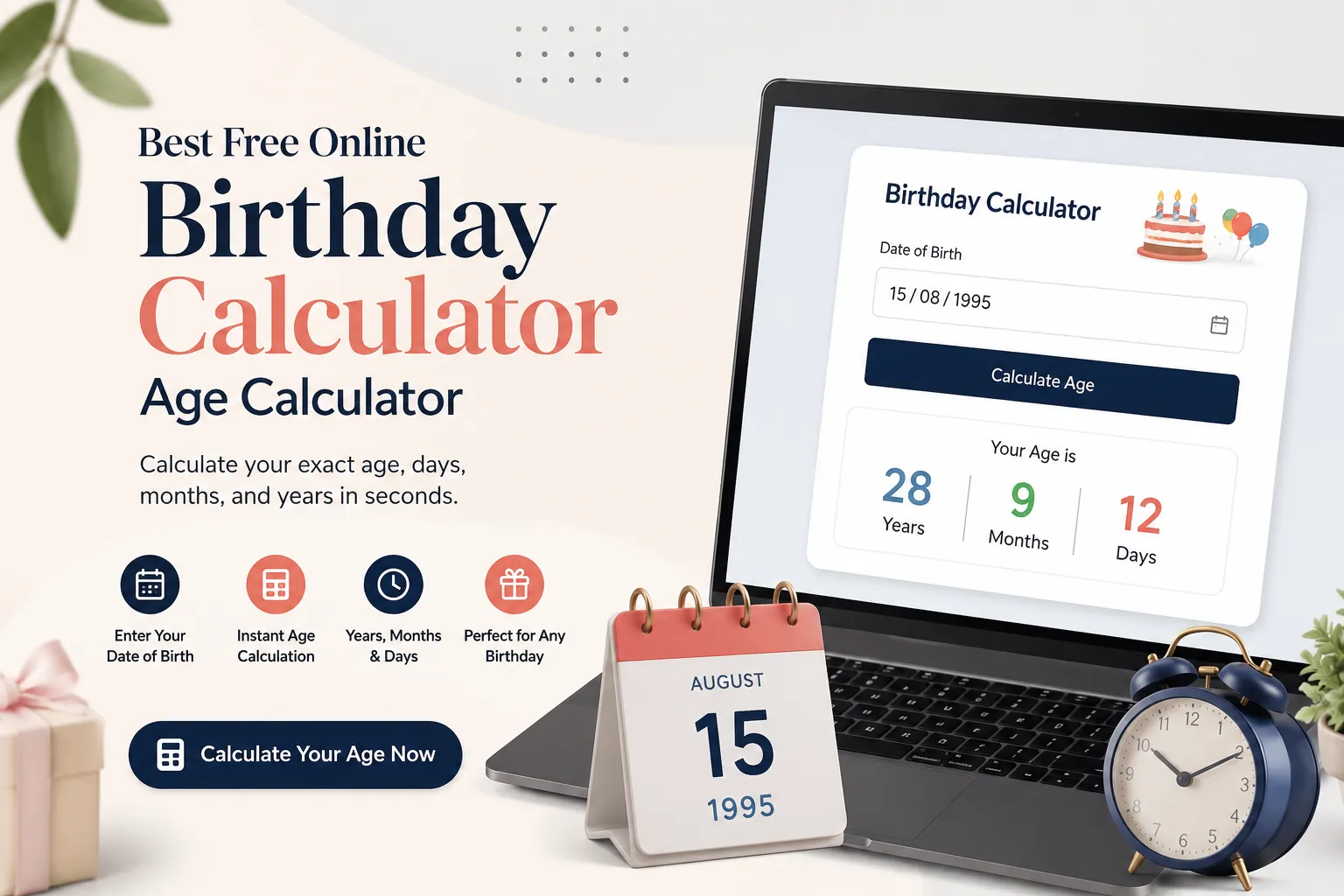
Calculate your exact age from your date of birth instantly. Free Age Calculator with years, months, days, birthday countdown, and leap year accuracy.
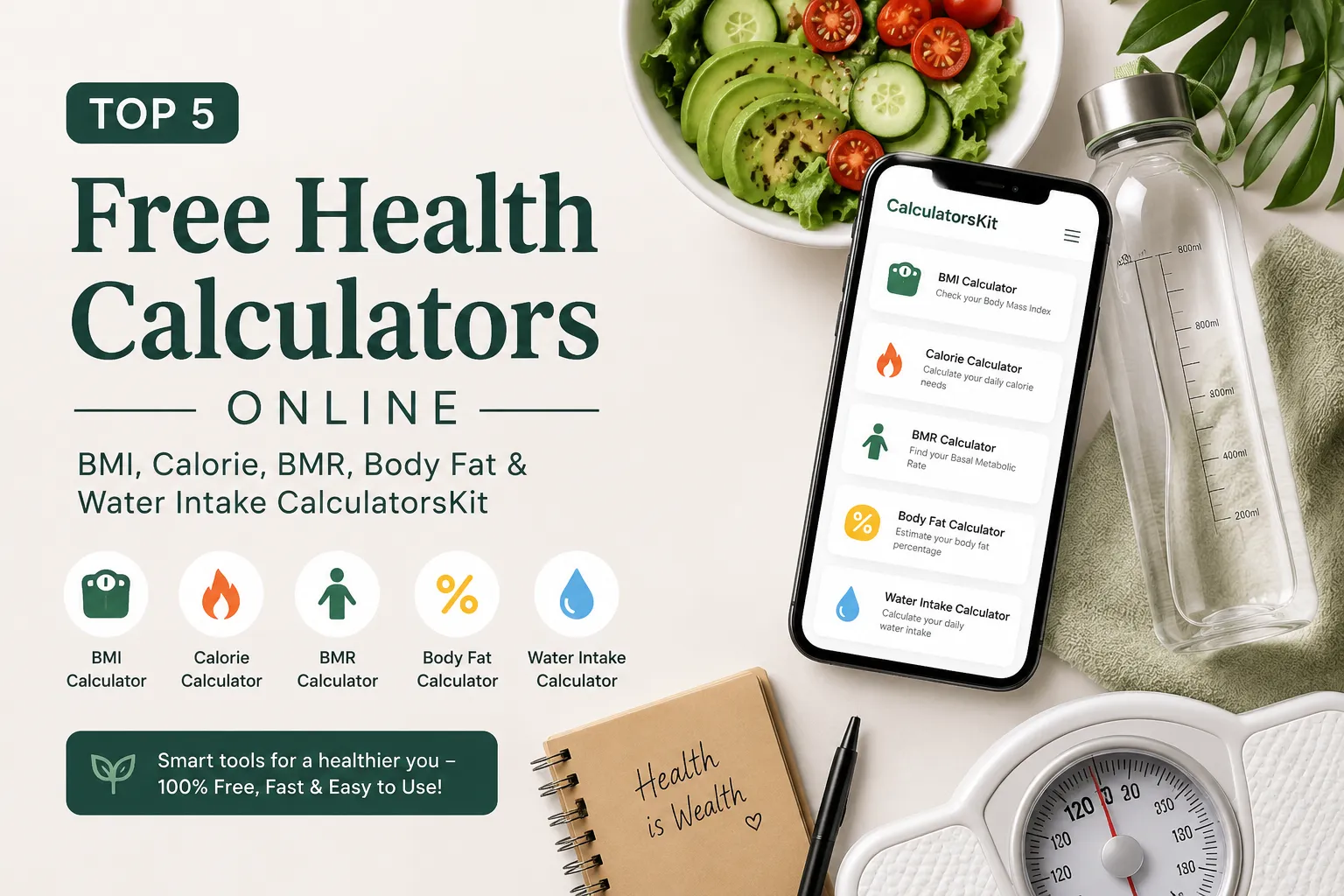
Use our free Health Calculator to calculate BMI, BMR, and TDEE instantly. Get accurate calorie needs, healthy weight insights, and fitness results.

See how long your savings can last in retirement. Calculate withdrawals, inflation, taxes, and returns with real $750K and $2M examples.